Author Archives: Jeff Allen

Unknown's avatar

About Jeff Allen

A professor and scholar of wisdom

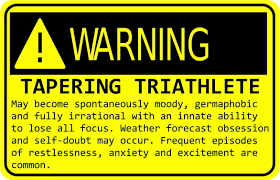
The Ironman Taper

I’m NOT the original author – going to keep it here so it can be linked in the future….

Per Ellen Frasca Evans the original author is Bob Mina. Written before before Ironman Canada in 2002

There are a lot of different sources and a couple of versions – this one hit’s it just about right and was posted by my teammate Ironman Paul Beaty before 
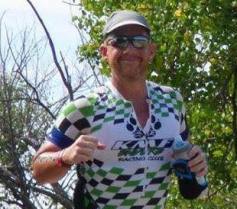
his first Ironman at IMAZ 2016.  I hope to cross the finish line of Arizona in 2017.

It’s been a long year of “the grind”.   The coaches and the team have me prepared.  Family is ready for this first Ironman to be done.   IM Arizona in seven days.


Enjoy!


The Ironman Taper


Right now you are about to enter the taper. Perhaps you’ve been at this a few months, perhaps you’ve been at this a few years. For some of you this is your first IM, for others, a long-overdue welcome back to a race that few can match.

You’ve been following your schedule to the letter. You’ve been piling on the mileage, piling up the laundry, and getting a set of tan lines that will take until next year to erase. Long rides were followed by long runs, which both were preceded by long swims, all of which were followed by recovery naps that were longer than you slept for any given night during college.

You ran in the snow.
You rode in the rain.
You ran in the heat.
You ran in the cold.
You went out when others stayed home.
You rode the trainer when others pulled the covers over their heads.

You have survived the Darwinian progression that is an Ironman summer, and now the hardest days are behind you. Like a climber in the Tour de France coming over the summit of the penultimate climb on an alpine stage, you’ve already covered so much ground…there’s just one more climb to go. You shift up, you take a drink, you zip up the jersey; the descent lies before you…and it will be a fast one.

Time that used to be filled with never-ending work will now be filling with silent muscles, taking their final, well-earned rest. While this taper is something your body desperately needs, your mind cast off to the background for so very long, will start to speak to you.

It won’t be pretty.

It will bring up thoughts of doubt, pain, hunger, thirst, failure, and loss. It will give you reasons why you aren’t ready. It will try and make one last stand to stop you, because your brain doesn’t know what the body already does. Your body knows the truth:

You are ready.

Your brain won’t believe it. It will use the taper to convince you that this is foolish – that there is too much that can go wrong.

You are ready.

Finishing an Ironman is never an accident. It’s the result of dedication, focus, hard work, and belief that all the long runs in January, long rides in April, and long swims every damn weekend will be worth it. It comes from getting on the bike, day in, day out. It comes from long, solo runs. From that first long run where you wondered, “How will I ever be ready?” to the last long run where you smiled to yourself with one mile to go…knowing that you’d found the answer.

It is worth it. Now that you’re at the taper, you know it will be worth it. The workload becomes less. The body winds up and prepares, and you just need to quiet your worried mind. Not easy, but you can do it.

You are ready.

You will walk into the water with 2000 other wide-open sets of eyes. You will look upon the sea of humanity, and know that you belong. You’ll feel the chill of the water crawl into your wetsuit, and shiver like everyone else, but smile because the day you have waited for so VERY long is finally here.

You will tear up in your goggles. Everyone does.

The helicopters will roar overhead.
The splashing will surround you.

You’ll stop thinking about Ironman, because you’re now racing one.

The swim will be long – it’s long for everyone, but you’ll make it. You’ll watch as the shoreline grows and grows, and soon you’ll hear the end. You’ll come up the beach and head for the wetsuit strippers. Three people will get that sucker off before you know what happening, then you’ll head for the bike.

The voices, the cowbells, and the curb-to-curb chalk giving you a hero’s sendoff can’t wipe the smile off your face.

You’ll settle down to your race. The crowds will spread out on the road. You’ll soon be on your bike, eating your food on your schedule, controlling your Ironman.

You’ll start to feel that morning sun turn to afternoon sun. It’s warmer now. Maybe it’s hot. Maybe you’re not feeling so good now. You’ll keep riding. You’ll keep drinking. You’ll keep moving. After all, this is just a long training day with valet parking and catering, right?

You’ll put on your game face, fighting the urge to feel down as you ride for what seems like hours. You reach special needs, fuel up, and head out.

By now it’ll be hot. You’ll be tired. Doubts will fight for your focus. Everyone struggles here. You’ve been on that bike for a few hours, and stopping would be nice, but you won’t – not here. Not today.

You’ll grind the false flats to the climb. You’ll know you’re almost there. You’ll fight for every inch of road. The crowd will come back to you here. Let their energy push you. Let them see your eyes. Smile when they cheer for you – your body will get just that little bit lighter.

Grind.
Fight.
Suffer.
Persevere.

You’ll plunge down the road, swooping from corner to corner, chaining together the turns, tucking on the straights, letting your legs recover for the run to come – soon! You’ll roll back – you’ll see people running out. You’ll think to yourself, “Wasn’t I just here?” The noise will grow. The chalk dust will hang in the air – you’re back, with only 26.2 miles to go. You’ll relax a little bit, knowing that even if you get a flat tire or something breaks here, you can run the damn bike into T2.

You’ll roll into transition. 100 volunteers will fight for your bike. You’ll give it up and not look back. You’ll have your bag handed to you, and into the tent you’ll go. You’ll change. You’ll load up your pockets, and open the door to the last long run of your Ironman summer – the one that counts.

You’ll take that first step of a thousand…and you’ll smile. You’ll know that the bike won’t let you down now – the race is down to your own two feet. The same crowd that cheered for you in the shadows of the morning will cheer for you in the brilliant sunshine of a summer Sunday. High-five people on the way out. Smile. Enjoy it. This is what you’ve worked for all year long.

That first mile will feel great. So will the second. By mile 3, you probably won’t feel so good.

That’s okay. You knew it couldn’t all be that easy. You’ll settle down just like you did on the bike, and get down to your pace. You’ll see the leaders coming back the other way. Some will look great – some won’t. You might feel great, you might not. No matter how you feel, don’t panic – this is the part of the day where whatever you’re feeling, you can be sure it won’t last.

You’ll keep moving. You’ll keep drinking. You’ll keep eating. Maybe you’ll be right on plan – maybe you won’t. If you’re ahead of schedule, don’t worry – believe. If you’re behind, don’t panic – roll with it. Everyone comes up with a brilliant race plan for Ironman, and then everyone has to deal with the reality that planning for something like Ironman is like trying to land a man on the moon; by remote control; Blindfolded.

How you react to the changes in your plan will dictate your day. Don’t waste energy worrying about things – just do what you have to when you have to, and keep moving. Keep eating. Keep drinking. Just don’t sit down – don’t EVER sit down.

You’ll make it to the halfway point. You’ll load up on special needs. Some of what you packed will look good, some won’t. Eat what looks good, toss the rest. Keep moving. Start looking for people you know. Cheer for people you don’t. You’re headed in – they’re not. They want to be where you are, just like you wanted to be when you saw all those fast people headed into town. Share some energy – you’ll get it right back.

Run if you can.
Walk if you have to.
Just keep moving.

The miles will drag on. The brilliant sunshine will yawn. You’ll be coming up to those aid stations fully alive with people, music, and chicken soup. TAKE THE SOUP. Keep moving.

You’ll soon only have a few miles to go. You’ll start to believe that you’re going to make it. You’ll start to imagine how good it’s going to feel when you get there. Let those feelings drive you on. When your legs just don’t want to move anymore, think about what it’s going to be like when someone catches you…and puts a medal over your head… all you have to do is get there.

You’ll start to hear the people in town. People you can’t see in the twilight will cheer for you. They’ll call out your name. Smile and thank them. They were there when you left on the bike, and when you came back, and when you left on the run, and now when you’ve come back.

You’ll enter town. You’ll start to realize that the day is almost over. You’ll be exhausted, wiped out, barely able to run a 10-minute mile (if you’re lucky), but you’ll ask yourself, “Where did the whole day go?” You’ll be standing on the edge of two feelings – the desire to finally stop, and the desire to take these last moments and make them last as long as possible.

You’ll hit mile 25. Your Ironman will have 1.2 miles – just 2KM left in it.

You’ll run. You’ll find your legs. You’ll fly. You won’t know how, but you will run. The lights will grow brighter, brighter, and brighter. Soon you’ll be able to hear the music again. This time, it’ll be for keeps.

Soon they’ll see you. Soon, everyone will see you. You’ll run towards the lights, between the fences, and into the night sun made just for you.

They’ll say your name.
You’ll keep running.
Nothing will hurt.

The moment will be yours – for one moment, the entire world will be looking at you and only you.

You’ll break the tape at the finish line, 140.6 miles after starting your journey. The flash will go off.

You’ll stop. You’ll finally stop. Your legs will wobble their last, and suddenly…be capable of nothing more.

Someone will catch you.
You’ll lean into them.

It will suddenly hit you.
YOU ARE AN IRONMAN!

You are ready.
You are ready.
Redman 70.3 (Part II): The complete story.

Lake Hefner,Oklahoma

September 17, 2018

This is a complete report with Part 1 integrated into this race report….

After the last race I stated: “Continue to trained harder and longer with more bricks – the long distance is fitness, fitness, fitness.  Full-iron distance is scary from today’s viewpoint.”

As I enter this race, I can say that the work has been done. Coach Ben worked, to make me feel better, by added extra brick workouts since the last race. My fitness is deeper and I’m progressing to the deep Ironman fitness/resiliancy.

This race was a success (for the most part)!  Personal record finish time!

Before the Race Plan: My training continues to progress and I’m certain that my swim, bike and run have improved mainly through deep fitness. This should mean that I can push the swim effort, stay steady on the bike, and manage/push? the run. I’ll repeat my overall race goals from the last race: I want to enjoy the race experience and collect good data for my next phase of training.   I don’t have pace/time goals per say.    BUT….what would make me happy?  


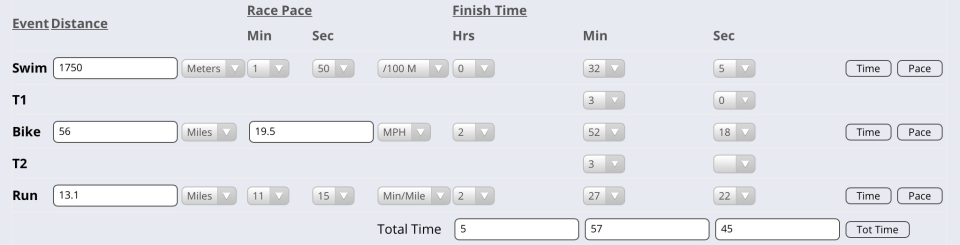
I finished the race in 6:02:14. I set a personal record shaving 17 minutes and 5 second off my best 70.3 finish. A sub six hour race is still teasingly close now.  My prerace goal was loafty, but almost got it accomplished.


13th of 28 in my division with the with 1st and 4th place
overall finishers coming out of my division.


SWIM

This swim was a washing machine with a 20mph wind that put a serious note to the swim.   Hint:  three marker bouys had already dislodged and pinned to the shore.  This swim (per race officials) was about 300 yard short and I don’t think any of the athletes were complaining.  I came out of the water toward the front of my swim group with a smile on Coach Ben’s face with the effort.
(8th place swim within division)

For my upcoming training:  Continue on the current path.  My swim is coming around and the distance is building.

BIKE

Before the race I noted: “I do NOT want to override this bike course.” I’m not sure that I overrode the bike course, but I rode the Hell out it.  I took every advantage of the course through techical bike skills. This was the the most wind that I’ve experience on any bike ride – seriously!  I was blown around like a small child in the crosswinds and buffeted by challenging headwinds.

What kind of ride was it? In the first 30 miles, I averaged 24.9mph and finished with a 20.2 mph average. Out with the wind for 30 miles and against the wind coming back.
(8th place bike within division)

Major Mistake:  I missed putting my electrolytes on my bike.   This was an oversight that made my pay dearly on the run.    My bike nutrition was on point (UCan liquid nutrition), but I only used water and had severe cramping coming off the bike due to electrolytes and muscle exertion.  I gave it all, but questionable whether it was too much.   70.3s simply hurt.

For my upcoming training:  Continue with the long bike ride and be sure to dial in an IM race pace both during training and during race.

RUN 

Before the race I noted: “Step over the finish line tired.”  YES, I stepped over the finish line tired. I came off the bike and stretched in transition.   I had cramped up taking my shoes off on the bike and knew that my electrolytes were out of wack – I hoped a good stretch would be enough.   I had a bottle of electrolytes waiting in transition – got some in my gut – and took the bottle with me.  

I wanted to push this run.   But, it wasn’t happening on a hot race day  (90 degrees). Every decision/mistake leading up to the run visited me on my run. I’m not sure that I had a muscle in my legs that didn’t cramp/quiver during the run. By mile 3, I knew that I would have to fight just to stay on a run. By mile five, an “easy run” pace was all that was possible without muscles starting to lock up. I poured electrolytes into my body with an effort to overcome 56 mile of inattention.  This inattention took it’s toll: At 9.67 miles, my left leg locked.  I got back on a slow run and found some relief at about mile 11 and I ended my attempt at a sub six hour 1/2 iron 400 yards from the finish line (2 minutes – yes, one length of the track)
(21st of 28th place with division)

For my upcoming training:  Run – nothing magic.  I feel comfortable were I’m at at this point of my training.   Continue to work toward to get faster over distances (long term)

NUTRITION

Before the race I noted: “This may be the biggest variable in the race. 95% of my nutritional plan is new.”

Nutrition was on point: GenerationUCAN.  The KMF team got me straight on this – one scoop every 30 minutes – perfect for what I needed it to do.  I did have some BASE salt added to the mixture.

Electrolytes suffered due to my prerace bottle preparation. Simply forgot to add it. Nuun 


Mentally

I was ready for a course that fought.  Predicted wind at 20mph plus prepared me for a tough swim and ride.  Unussually, I didn’t study my maps enoug prior to the race to know bike course elevations.    I was 200% prepared mentally for a 70.3.    During the course, there was a lot of  “self-talk” to determine:  tired | injured | painful | in-your head.  For the most part is was painful/can’t due to cramping rather that head problems (i.e, 9.67 lockup on run).

Done Right

Swim sighting was very good.  The bike was technically perfect for where I am now.   I got everything out of the bike that the course would give me.

Improvement

These remain from the last two race: Fitness and daily nutrition.   Need to be at race weight by next race in 60 days – said before – I’m getting there.  Improve my mangement of the race (mainly bike/run) – rather than pouring it all into bike.

My fitness is better since the last race and need to continue to progress during final eight weeks before IM Arizona – but I’m getting to Iron Fit.

Differently

  • One stupid electrolyte mistake cost me a lot.
  • Muscles need more resiliancy.  The cramping was surely a combination of muscle fatigue in addition to electrolyte imbalances.

I can remedy both problems.  Sometime the race is the race and 70.3 hurts.

Lessons

  • Full-iron distance is LESS scary from today’s viewpoint.
  • My swim sighting and lines are fine.  I lose time worrying about others.
  • Check and double check preparations.
  • Stay within the moment of the race and assess fuel gauges.
  • Carry salt and emergency electrolyte boosters in case of emergency.
  • No nutrition needed on the run.   No water bottle unless hot.

Back to Training

Continue to enjoy the training and race preparation process.

Next race

My “A” race is next.  It’s been a long season of races and preparation.   IRONMAN ARIZONA looms in the future.

Redman 70.3 (Part 1 – Pre-race)

Edmond,Oklahoma

June 25, 2017

I’m breaking this blog into Part I and Part II. Why? There’s a lot of “thinking that happens” during taper week of a race – a lot of race plans are finalized.

After the last race I stated: “Continue to trained harder and longer with more bricks – the long distance is fitness, fitness, fitness.  Full-iron distance is scary from today’s viewpoint.”

As I enter this race, I can say that the work has been done. Coach Ben worked, to make me feel better, by added extra brick workouts since the last race. My fitness is deeper and I’m progressing to the deep Ironman fitness/resiliancy.

Overall Race Plan

This is my third of three 70.3 races in preparation for Ironman Arizona 2017 (65 days). This race course will somewhat similar to the Arizona race in the elevations, wind and weather. The weather for this race, on Saturday, is the looking as if the course wants to put up a little bit of a fight. But a flat bike and run course will even the fight a little between the athlete and the course.

My training continues to progress and I’m certain that my swim, bike and run have improved mainly through deep fitness. This should mean that I can push the swim effort, stay steady on the bike, and manage/push? the run. I’ll repeat my overall race goals from the last race: I want to enjoy the race experience and collect good data for my next phase of training.   I don’t have pace/time goals per say.    BUT….what would make me happy?

SWIM

My post-race notes last race to help with this race: “Just swim.  To Hell with everyone else.  My sighting and lines are fine.  I lose time worrying about others.”

There’s a fine line between drafting of other swimmer and staying within your own swim. There are moment of opportunities that I need to take advantage of – as faster swimmers pass me on the course I need to get a little boost and hang on a hip for :30 to 60 sec.

Last Swim Time: 00:38:01. I would love to cut some time off of my last swim, but I’m expecting a chop and need to remember advice of short, fast strokes.

BIKE

Aerodynamic positioning. Staying in aero position will be important in this flat course with strong head and tailwinds. This type of course should be built for my size and power – this is an area of opportunity within the race.

Last Bike Time: 03:01:40. This flat course should provide me an opportunity to drop a few minutes off my last race. I do NOT want to override this bike course.

RUN

A 10:18 pace is an optimal pace for this race…..it teases me from afar. As much as I dream of this pace, an 11:15 is more likely as a TOP goal pace for this race. I do want to have a fast run than last race and inch a little closer to that 10:18. The pain is real. Step over the finish line tired.

Last Run Time: 2:30:50 

NUTRITION

This may be the biggest variable in the race. 95% of my nutritional plan is new. More about nutrition in Part II.

[END OF PART I}

Buffalo Spring Lake 70.3

Lubbock, Texas

June 25, 2017

This was expected to be a 90+ degree race with winds exceeding 20mph.   Instead, we had moderate temps in the 80s with a 8-10mph SE winds and overcast skies.   This is a tough race course with history.

I’ll get into the race to begin with and then add details at the end.   The goals are what I send to my coach (Ben Drezek) prior to the race:

Overall. I want to enjoy the BLST race experience and collect good data for my next phase of training.   I don’t have pace/time goals per say.    I want to enjoy the BLST race experience and collect good data for my next phase of training.   I don’t have pace/time goals per say:

SWIM

My pre-race notes to coach: Swim. Good swim focusing on lines of sight and effort level during the swim.  I would like to be able to get onto the bike in great shape with a clean transition that’s efficient but not rushed.   What to pay attention to get some good liquid in me during transition to stay ahead of hydration.   Steady swim pace.  

From my Galveston race report: “Need to learn to use my arms as oars and pull myself through the water – I’m thinking about swimming in the wrong way – need to continue to change and make this part of the race easier – not faster, just easier.”

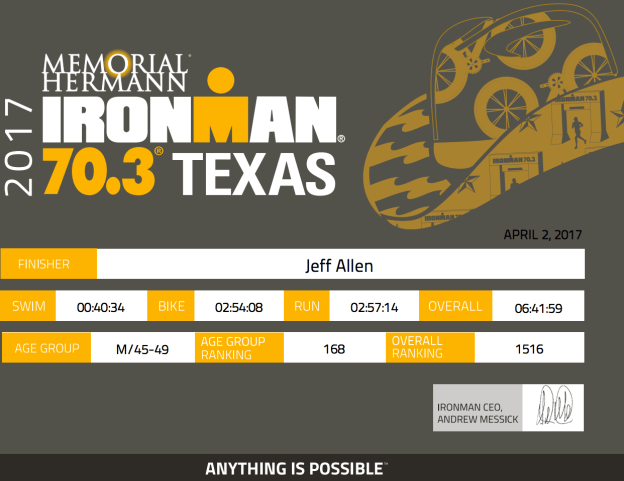
Last race: Time: 00:40:34

This was a easier swim that allowed me some distractions. I’m still learning to draft and I got caught in this game during the race.  I would have had a much better swim without worrying about others and simply swimming between the buoys in clean water.   Nothing special on the swim but cool 74 degree water.  I had a steady swim pace and certainly COULD have pushed the pace at points.  I settled during the swim and kept a great rhythm.  I did use “use my arms as oars”.   This was a decent improvement from the last race and can be put in the win column.  I swam slower that capability, but felt good coming out the water – need to find a middle ground.

Swim Time: 00:38:01

I would have like to have seen this closer to :35, but I’m happy where I’m at for the moment.

For my upcoming training:  Continue to concentrate on bilateral breathing and use speed/strength training to improved upper body pull strength.

BIKE

My pre-race notes to coach: Bike. I’m going to push the bike but not to breaking – with nutrition at the forefront of my thought.  Want to see what I can steadily maintain over the distance.    What to get good nutrition and stay ahead of hydration.

Last race:  Time: 2:54:08 [wreck]

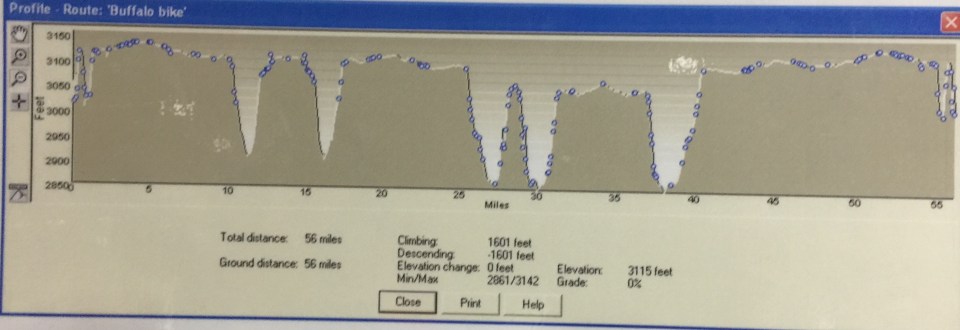
This was a much harder bike course and I did my best.  I hung about 15 minutes off of our KMF team leaders for the duration of the bike and felt strong on a challenging climb course with elevation change of approximately 3000 feet.

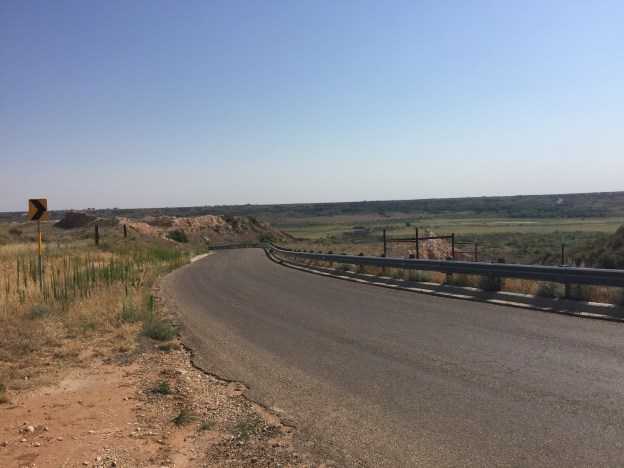
IMG_0624.JPG

Screen Shot 2017-06-26 at 4.51.32 PM.png

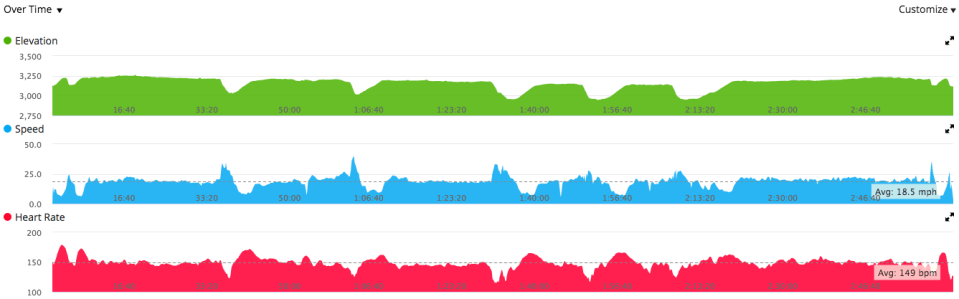
This is by far the most fun that I’ve had on a race course.  Never looked at my data during the ride, but knew that everything was clicking on the day.  Happy with an 18.5mph average on the bike.  If you are interested, top speed was 39.8, slowest 6.9 on the final climb.  My training preparation was on point and I was where I needed to be as I transitioned to the run.

Bike Time: 03:01:40

For my upcoming training:  Continue to put miles on the bike with a concentration on long and steady.

RUN

My pre-race notes to coach: Run.  Little bit lost as to how this one will work out, but I’ll play this one by ear.  I plan to take a moderate/easy pace coming off the bike and see where the legs are for the run. From last race report: “Next time: I will have a hydration bottle with me on the run.  This is something that I need to start using on every long run to get use to the idea.”   I’ve worked on this since Galveston and I’ll take your advice on a small ice chest with a throw away bottle of cold water rather than carrying a bottle the whole time – this seems a more reasonable solution.  I’ll again take in some salt on the ride and run.

Last Race: Time: 2:57:14 [walked due to bike problem]

Prior to the race, this run course had me scared to death.  The idea of coming off a very tough bike course onto a challenging run course left a lot of room for error.   In a pre-race seminar it was mentioned many time that this course was decided in the run.

The course was made of many small hills of 20 – 100 yards and a large 1/2 mile hill with a 10% grade – yes, we got to do it twice..   I started on the run course beside my teammate Paul Beaty and took the first mile of the course a little faster that I should – my decision.  We parted was and he continued his race as I settled to a 12 minute pace – my chosen pace based on how I felt and what I thought I could maintain for remainder of the race.  Screen Shot 2017-06-26 at 4.59.03 PM.png

I alway feel uncomfortable for the first 3 miles, but try to distract myself to plan my run. I don’t necessarily like running wet, but ice cube in my kit sounded like a fine idea.  They were a GREAT addition and likely saved my race from heart rate spikes when the sun made its appearance.   I settled into the race in mile 4, forgot the miles between 5 and 10, and the last three miles were TOUGH  but my pace didn’t suffer too much.

Run Decision 1: Denise and the kids gifted my with a camelback running bottle, and per my training I carried it throughout the race – this was an asset that I keep with my during my next races.   The ability to sip throughout the race was remarkably comforting and helped my maintain an appropriately hydrated throughout the run.  This was a race time decision since I put it in transition – it paid.

Run Decision 2:  I made the decision to walk the aid station.  This is different from having to walk the aid stations (at least in my mind).  I’ve heard this advice in the past and was too stubborn to do it.   I’ll never run through an Ironman aid station again.  Paul Beaty will tell you that it’s more like a power walk, but still it allowed me to fill up with gatorade, water and ice as needed and let my my body recover.

Decision 3:  Don’t walk.   This sounds easy, but it was the toughest one of the day.  There’s not a single team mate that wouldn’t have patted me on the back and congratulated me if I would have walked part of this run course, but on the drive to the race on it became my number 1 wanna do for this race. Decision 2 made this possible. Success.

Teammates on the run course were remarkable to be able to give a small boost when you were climbing our an attaboy when you were rocking a downhill.  I little bit of run time with Paul and Tim were valuable and up lifting.

After Galveston I stated: “Buffalo Spring will be in 89 days.    This means that I have a significant training block to increase my long-course fitness.  I would like to see a swim less that 00:40 with less effort and a completed run.    This is a much harder race from my understanding – a DNF is waiting if my preparation is lacking.”

For my upcoming training:  I need to continue to work on my run strength.   It’s very different to run a 1/2 marathon or a marathon versus putting swim yardage and bike miles in prior to a running race.  BRICKS, BRICKS, BRICKS.

Run Time: 2:30:50 

OVERALL TIME: 06:19:19

SUMMARY

This was a much harder race – a DNF was waiting if my preparation was lacking – my training wasn’t lacking.


I’m going to use Coach Amanda’s prompts for the next portion:

Mentally

I was 100% ready for everything that the race could have thrown at me.  I was ready for the worst.  The course was challenging, but nothing more than what I expected.

Done Right

Stay with my phase of the race.  Nutrition was on point with little need for change – more liquid nutrition is better.

Improvement

These remain from the last race: Fitness and daily nutrition.   Need to be at race weight by next race in 89 days – said before – I’m getting there.

I’m 1/2 Iron fit.  This is good at this time of year.   Now, Iron Fit.

Differently

I have little that I would have done differently at this race.  Planning and execution were as good as could be expected and was able to experiment with hydration, ice, and aid station breaks

Lessons

Continue to trained harder and longer with more bricks – the long distance is fitness, fitness, fitness.  Full-iron distance is scary from today’s viewpoint.

Just swim.  To Hell with everyone else.  My sighting and lines are fine.  I lose time worrying about others.

Back to Training

I want to continue to improve my intensity during training and push my work sessions. It was a pleasure to be prepared.

Next race

[going to leave this on blank – deciding on the Redman/No-Redman 70.3]


Ironman 70.3 Texas

April 2, 2017

First ½ Ironman!

Weather overcast and 70 – 80 degree for race time with 90% humidity.  Water 74.5

This was a much-anticipated race and the first of three 70.3 races in preparation for Ironman Arizona 2017.   This was a race – not a training session. I’ll find myself often saying that I’m using one race to prepare for the next, but nothing can be further from
the truth.   During each race, I purposefully experiment with a couple of different ideas to learn how they work.  Since I’m not yet a podium racer, I have the luxury of testing during my races.   I love competition and have a goal of getting my time faster than the mean of my age group – not quite there yet.

I’m going to treat this as a race report and provide a little more insight than I’ve normally taken in my report/blog.

Skip next two (nutrition and hydration) sections if not interested:

Nutrition

Nutrition was an important part of preparation for this race and a weakness in previous race preparations.  Here are the numbers prepared and used:

Pre-race        100 calories – Tailwind liquid nutrition in throw-away bottle
150 calories – Cliff squeeze | replace with real banana next time.
150 calories – Honey waffle

Pre-race nutrition was planned at 300 calories – due to lack of two bananas, it was supplemented with other nutrition with no ill results.  I prefer the real food of bananas with the potassium, carbs and sugar.   Light breakfast and 250 calories consumed during 1.5 hour prerace – couldn’t stomach squeeze nutrition.   250 calories are perfect for prerace and after light breakfast upon wakeup.

Bike               600 calories Tailwind liquid nutrition in two bottle on back of bike
Water in torpedo on front of bike
200 calories in squeeze Gu
300 calories – Honey waffles
One tube of Base salt

My goal of bike nutrition was planned at 250 – 300 calories per hour on the bike on the bike   – took in 1100 calories for 2:54:08 the only remaining nutrition was approximately 100 calories of Tailwind that was inaccessible after mile 45.   It was tough consuming calories and tough juggling bottle in a hard crosswind.   But done.

Run                200 calories in squeeze Gu
200 calories Cliff Shot chews
One tube of Base salt
4 sticks of gum
4 pieces of ginger candy

Run nutrition was unable to be tested.   But, based on what I consumed of course fuel, I should have packed 400 calories of squeeze Gu rather than 200. 400 emergency calories should be just about right.   Candy/gum is good, but ½ what was packed.  Chews are unnecessary with course nutrition.  I’m traveling slow enough to consume course nutrition if not Gu.   Course squeeze nutrition cannot be counted on since you don’t know the flavor.   I picked up course squeeze nutrition on bike and run and only tasted it before disposing.   Nothing wrong, but not the mouth tasted I WANTED.  Next time:

400 calories in squeeze Gu – coffee and peanut butter
one tube of Base salt
4 sticks of gum
4 pieces of ginger candy

Hydration

This was an area of experimentation on this race.   I wish I did better here and thought it through completely before the race.   I trusted that my liquid nutrition would hold me on the bike and course hydration would hold me on the run.   I was wrong.

Next time: I will have a hydration bottle with me on the run.  This is something that I need to start using on every long run to get use to the idea. I sweat a lot and I need to have a better idea of my liquid intake.  I skipped some watering holes because I simply didn’t want to deal with the little bit of water/Gatorade.   I observed bottle filling on the course and it’s a good way to load up on one and skip a couple and easily water/Gatorade mix.   My hydration test after the race showed not enough water consumed on course.  PLENTY on the bike and prerace, but not on the run.
Base Salt:  I believe that this saved my race.  It was a planned experiment for the race.  This is the first time using salt during any of my training or racing.  Yes, I took the chance of something brand new on race day.   But, it was planned three weeks before the race. Not a high-risk chance.   I consumed salt on the bike approximately every 5 mile until mile 34 when the tube was lost (more in bike report).  There were a LOT of people hurting during this humid race – I wasn’t one and contribute it more to the salt than consistent water intake.   This will now be a critical part of my plan since I will be on the run course during the hotter parts of the day.

The Race

Overall, it was a bitter-sweet race.   In a wreck at mile 34 that I cost me a very good bike time it turned from sweet to bitter.  Before mile 34 my race plans were on track.  After mile 34 the race was about finishing strong despite the race problem.  The details:

Swim

I did not know how to estimate my swim time for my first open ocean swim, I simply calculated what I could do in the pool – 1:47.   Wrong.    This was a rough choppy swim with big choppy/inconsistent swells on the backside.   Summary, the swim was great.

I used my coached pointer of getting my space (Thanks Coach Liz!) and mixed it up in the mass start. It was a fun start and I made it out of the first 300 yard largely unscathed by defending space. Big and strong helps here.

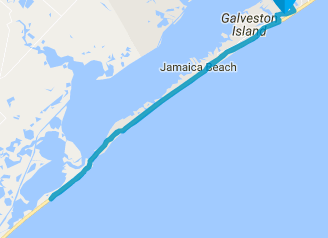
Screen Shot 2017-04-03 at 6.53.08 PMThe first and second turns required a left side breathe and the next two required a right – lucky, I got fussed at about this about 4ish weeks before and had worked at every practice with opposite breathing each length of the pool.   This correction and my athlete follow-up of consistent practice saved my bacon on the swim. Salt water on the swim is nasty.
A lot of work is needed on swim drafting.   I tried to draft with only mild success and finally stuck to the clean water – review of my swim map showed consistency in sighting.

Last turn, I messed up by experimenting: I had not previously tried a 90 degree tight turn around a buoy in practice but, I decide that this was the right time (idiot).  Calf cramp from my inexperience and a wave that hit at the wrong time.  Lesson learned!  I executed an advanced swim technique that I had seen and tried once that could have cost me as the day went further.

For the first time in race conditions, I trotted out of the water in good shape – best I’ve felt after swimming any distance.   1:55 / 100 splits.  Inconsistent paces during the race need to be cleaned up, but overall very satisfied.

Time: 00:40:34, Estimated: badly.

Transition 1:

Garmin showed a 2-minute transition and Ironman recorded 04:37. Ironman results seem right after I changed into socks for the bike.   This was a smooth transition for the day with shoes packed in plastic in case of rain.   My transition area was laid out well and I felt good.  Nothing that I would change for transition, apart from a place planned for my used swim equipment.

Bike

This was the toughest bike conditions that I have had during a race.   Inconsistent crosswind between 18 – 25 meant working to handle the bike all day.   Minimal elevation change meant that power had to be controlled and maintained on this out-and-back course.   Humid ocean winds meant that bottle were wet and slippery think juggling and navigating a bike.

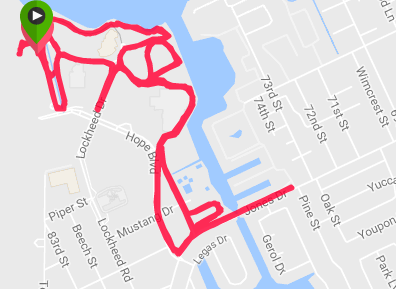
Screen Shot 2017-04-03 at 7.11.42 PMMy bike nutrition, hydration and salt were consumed on time and were digestible.   The first 34 miles were textbook for me with an extra Gatorade endure pulled from an aid station for easy slug right after the turn around.
The bike accident at mile 34 was at the top of a windy bridge with an ugly front crosswind.   An ?inexperienced? cyclist couldn’t handle themselves and decide that I was their safe space and crashed me.   I was devastated when it happened.   I saw my race vanish in puff of smoke.   Four minutes and fifteen seconds had me back on my bike and heading home. I apologize to any on the bridge to the mainland for my language during this time – it would have made sailors blush.  A second quick stop for a check of wheel and alignment double-check cost me another two minutes and fifteen seconds.   I was then stuck to one gear for the next ~14 miles (within walking distance of transition) before I began experimenting with gears.  This meant little ring and little gear – not bad, just not what I need to make optimal power/time.   I then tentatively changed gears and created a better attitude (less cussing) for the remainder of the bike.

I pulled into transition, for the first time, with a sigh of relief that I had survived the bike portion and made it to the run.

Time: 2:54:08, Estimated: 2:57:02.   Great time for a tough race day course and an accident mixed in.

Transition 2:

Transition time was 05:26. I wanted to hurry with purpose, yet gather myself for the 13.1 miles left in the race.   But, I was looking forward to the run.  I worked my winter training season to improve my run fitness. I did change my socks, possibly unnecessary – simply wanted dry socks. Nothing that I would change for transition.  I bottle with nutrition would have been a bonus.

Run

Trotted from my bike to the run before turning the corner and starting a jog.   Didn’t feel great, but I had a full-bladder. Well-hydrated.  Didn’t want to stop, but it was welcomed.   I started my jog with tired legs for the first mile and felt my head begin to pound.    I had busted my noggin on the concrete during the crash and my slight headache increased dramatically.   I slowed and walked and started again with a run/walk to see if I could shake what I was feeling.   Yes, legs were tired, but the impact difference between a walk and jog was dramatic.   Again, race hopes faded.

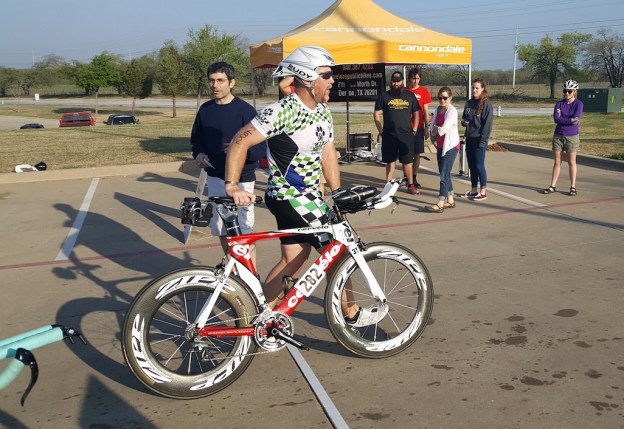
Screen Shot 2017-04-03 at 7.13.45 PMI walked for the next two miles to settle and experimented again in mile 4.  I knew that my race was done and my goal was completion – with a long walk “this is my race”.   This is the way it continued to the end.
Medically, all is good.  I simply relegated myself to the fact that that a walk was manageable today.   In mile 5, my mind was settle and I set my pace at a stiff power walk and mild cussing.  It was good to be on the course with other competitor that were in much worse shape and fighting their own demons.

Time: 2:57:14, Estimated: 2:57:02.

I’m going to use Coach Amanda’s prompts for the next portion:

Mentally

DNF on my first attempt at a 70.3 was stuff of nightmares (literally from two-nights before).  This was a mental race after the bike crash – after assuring I two wheels to ride back to transition.  Age has its advantages.  I knew that even with a possibly chipped elbow or re-broken clavicle that I WOULD ride if the bike would take me – road rash was just an irritation.  I had 43 different references that were worse situations than my current position.  If I would get me and my bike back to the transition, I knew that I could conquer the run.   Little did I know that the race had another surprise – no run for me.

Not running again conjured images of a DNF on my first attempt at a 70.3.  My inexperience in triathlon gave me plenty of room for stoppage reasons.   By the end of the 1st of three laps, but attitude was much better by managing my expectations.  A one hour lap meant that my race goals were blown.

Done Right

Researched, recorded, and successfully implemented nutrition plan.  Stay with my phase of the race without much planning beyond the next 10 minutes in front of me – this kept.   Swim had many places for hiccups, found my happy place and stayed there – pacing was good.

Improvement

Fitness and daily nutrition.   Not 100% sure that I could have run the entire 13.1 miles; not required, but desired.   Need to be at race weight by next race in 89 days – said before – I’m getting there.

Differently

Need to be aware of the others that were doing  things on the course.  At my normal start time, there are numerous unprepared athletes that can impact your race.   Additionally, salt and hydration needs to be a mainstay of my long course plans.

I regret not celebrating this race more at the finish.  I was pissed as I came into the finish line.   I’m not sure that it was reflected in any of the pictures, but it was there.  I have a great family, teammates and coaches that committed a lot of time to getting me across that finish line.  My pride was hurt that I couldn’t put it all on the line.   I saw, twice, my race finish vanishing from me.  Over 84 in my age group did not finish (I counted that would have been pleased to be in my place walking across the finish line.  Suck it up buttercup. Need to enjoy the good and bad – embrace the suck.

Lessons

Trained harder and longer with more bricks – the long distance is fitness, fitness, fitness.  Use upper body for swim and use it as a good “warm-up” for the remainder of the day.  Overcome what you can and accept what you can’t is easier said than done.

Back to Training

More bricks – the long distance is fitness, fitness, fitness.  Need to learn to use my arms as oars and pull myself through the water – I’m thinking about swimming in the wrong way – need to continue to change and make this part of the race easier – not faster, just easier.   Need to stay in the moment during training and concentrate on what I’m training rather than filling the time with other “non-training” activities.

Next race

Buffalo Spring will be in 89 days.    This means that I have a significant training block to increase my long-course fitness.  I would like to see a swim less that 00:40 with less effort and a completed run.    This is a much harder race from my understanding – a DNF is waiting if my preparation is lacking.


Mean Green Duathlon

I did this one to myself – on purpose.  Why?  To make me train the run.   This is my first race of the 2017 Triathlon season.   There was a choice for this race to run the triathlon or duathlon.   So, I chose the duathlon option so that I would be “forced” into a second 5k run rather than a 400 yard swim.

Short races hurt.   In my opinion the short races are tougher in many ways than the longer distances.

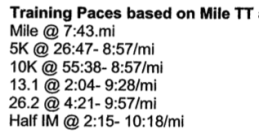
Screen Shot 2017-03-19 at 10.23.38 PMDuring our clubs February wintercamp, testing showed what I should be capable of at different distances.   These are scary numbers.   I did run the mile in 7:43 and it was the hardest that I can remember physically doing in recent memory.
The Mean Green Duathlon was planned as a training race – meaning that my preparation for the Galveston 70.3 race would continue with little variation to my normal training plan.  On the morning of the race I was still muscle sore due to the week work, but I wasn’t surprised.  You have to race the race.  Race the day.

The plan:  Race the first run leg (5k) at 9:00, ride the bike at maximum capacity (12 miles), as then see what was left on the second running leg (5k).   To be honest, I had no plan.  A short coach discussion solved this problem.

The temperature, wind, humidity, and other conditions were great for a Spring race in the mid 60s.

First Run Leg: I never like the start of a run, any run.  The first mile or three hurt and it take time to find a rhythm.  For this gun start race, the field started fast and I traveled with them for the first 400 yards, and then settled into a pace that was about 30 seconds too fast.   I moderated the pace back down to 8:50 and felt comfortable…except for the heavy breathing that seemed to come from another monster of a person.  This is two lap course and I continued to hold the pace.   The first leg of the race (actually 2.85 miles) at end witha 8:52 average pace – and exceeded my goal pace.   I trusted the number and pushed sometime you don’t quite know your capabilities – trust the coach.

Bike Leg:  I came into transition worn out.   I knew that I would be tired, but I was really tired.  I took about 30 seconds to calm my breathing and thanks to Paul Beaty I put my helmet before leaving transition – by the time I mounted my bike I was ready for a new race.   12 miles (actually 12.6) miles with 20.2 mph average.   I thought I did better!   I felt as if I was flying down the course, but I’m guessing that my legs had enough by the end of the week.    No worries – it’s a training race.

Second Run Leg: Rubber legs aren’t a good start, but I knew the feeling from brick training.  Shut up legs!   I started the run with positive attitude, but with some trepidation as I looked at another 5k run.  I was right.  Within a half mile my legs wanted to stop.   What kept me from walking?   The athletes that were walking – I just didn’t want to be that guy.  I ignored my data and just kept moving forward.  A 9:55 pace tells the tale, but I’ll take it.  I survived!  I enjoyed the course, a great set of volunteers and the alway present cheering section.

Could my second leg have been faster?  Maybe.   I settled at about 1.5 miles into the second leg.  However, I ended the race tired and satisfied.

Next stop?

Ironman 70.3 | Galveston, Texas | April 2nd


Postscript Notes:

Nutrition:   Nutrition was good for this race.   Quick breakfast 3 hours before, a banana one hour before, and a banana 1/2 hour before start time.  Since this was a training race/day I kept things simple.    On course used Tailwind (200 calories in water bottle), consumed 1/2 bottle in transition, and on bike (200 calories) consumed 1/2 bottle.    Course water/gatorade mix during run (3:1).   All good for nutrition – but


Hot Chocolate 15k, Dallas, Texas

The 15k is a strange distance.  I haven’t raced this particular distance, but now have enough races under my belt to begin estimating my pace and understand the character of the race as it happens.

16473487_10210960772089270_6590897849891174483_n.jpgWhy this race?  Jared Allen (pictured), my oldest son, decided to run the 5k.   No pressure, simply go out have have a good race with my son.

I set a race goal pace of 11:00 min. This was reasonable pace based on marathon pace.

During the Dallas Marathon, I ran a 12:00 min pace and exceeded my goals.  I didn’t have the same idea here. I simply wanted to DO THE WORK.    This is the first race in a very long 2017 season.  Coach Ben and I agreed to the pace with the idea of seeing what left for the last three miles.

Nutrition prior to the Race: Banana and #completecookie an hour before the race.   200 calories of #gotailwind waiting for the start.

The race started cold, humid with sprinkling rain.  At the same time, I hoped that my race would stay together.   I didn’t “feel” 100% . . . probably not 80%.  I’m a slow starter and the first 2-3 miles are always painful.  Plus, no heart rate monitor and the car parked a country mile from the start line.   Plus, thinking of Jared already on the 5k course trying to beat a PR – it would be a good day one way or another.

Nutrition on course: Clif Shot Bloks, and course provided NuuN

The first mile of the course is slightly declined and fast.  My pace started faster than I wanted at 10:12, but it felt calm and comfortable.   I determined, based on the course, that I would try to hold pace for the first 5k (10:11, 10:12).   On the other hand at this pace a crash and burn is inevitable.  Starting 45 seconds faster than a planned pace is asking for a later crash.

The second third (5-10k) was faster but I was holding the faster pace.  I stopped looking at my pace.   Why not take the shovel and dig deeper – there’s a wall and I was playing with ugly numbers (9:46, 9:45, 9:51) more than a minute and fifteen faster than my plan.

Did I say that I was a slow starter?  This pace was faster than I’ve run ANY timed 5k.

During the second third, I contemplated a lecture that Ben Drezek gave at the Tri-Shop,Plano in May 2016… to paraphrase:

There are moments of opportunity,
moments of settling (this pain is enough),
and moments of patience.

This meant a lot to me at a time since I was coming off a less than stellar performance of “settling” during a race.   Today, my back was killing me – everything else was working perfectly, but my back was hurting because my posture was hurting.  I could settle and have solid reasoning.

However, I made the choice of a “moment of opportunity.   I mentally divided the 15k into three separate races.  I was now finishing the second….and predicted that I would burn out but not yet….When? Today was a running day, so I pushed the pace again.

ONE of my 2017 triathlon goals is to run a “under 30 minute 5k”.  A less than stellar goal for many, but one that I need to handle.   So, I doubled down and started to push the pace in mile six.   It seems ridiculous to think this way this deep in a race, but these are the tricks we play with ourselves when we run at distance.

So, in my last 5k (race 3 of 3) I grunted out 9:18, 9:17 and 9:25 or a 28 minute 5k. Mile 7 -9 hurt.   Really hurt, but there was nothing injured.

The first part of my race didn’t matter anymore.   I don’t know that I’ve ever been more tired at the end of a race.

Yes, Jared ran a 25:50 with minimal training!  His first 5k race.

My goal: 1:42:32
Actual: 1:31:52 (10:42 under)

My first race of 2017 was going to be good regardless of the race outcome.  Turned out to be a lot of learning on a Saturday morning in February.

StateFairHotChoc15k.jpg

Growing up in the dirt

Growing up is mud pies, cut fingers, skin’t knees and elbows. Growing up is scars that don’t go away – they tell your story.   Growing up is both a mangy dog and fleas in your favorite hand-me-down sleeping bag – you don’t mind, he’s a friend.   Growing up is your first view of the Pacific Ocean and first taste of lobster caught out of the back of the restaurant. Growing up is a sleeping on your favorite horse under the oak trees on a hot summer day – you don’t mind falling, you can get back up by way of the barb wire fence.   Growing up is a BB gun – hunting for song birds.   Growing up is your first shotgun – for crows and squirrels.   Growing up is lead shot is the bottom of the stew pan – and between your back teeth.   Growing up is your first teepee, log cabin, fuzz stick – with two matches. Growing up is your Boy Scout firem’n chit and tote’n chit – with the burns and cuts to show that you earned ‘em. Growing up is grasshoppers collected on the morning grass – next to the favorite fishing pond. Growing up is cane poles, a red and white cork, and a big grasshopper, that just clawed you – on the end of the line.   Growing up is a family img_9110camping trip in the back of an old Ford at a place a long ways away  (20 miles from your home).   Growing up is learning how to carve a ball captured in a piece of wood from an old man with a sharp knife – and him letting you help him with his.   Growing up is jumping quail and peeing your pant – just a little. Growing up is eating pears out of a pear tree – until you’re sick. Growing up is eating more pears out of a pear tree, the next day – until you’re sick.
Growing up is your first hunting lease and first deer. Growing up the first gun you have bought on your own.   Growing up is camping with a high school friend with shotgun propped against a tree and a rabbit on the fire.   Growing up is skipping school to go fishing. Growing up is skipping school to go hunting.   Growing up is simply taking time just to be.

Growing up is time watching your kids do the their own thing in their own way and realize amount of the time that your parents spent watching you experience your first of many times. It’s realizing that your parents truly understood the difference between good-for-you, good-for-you-might-get-you-hurt, and might-get-you-killed.   It’s realizing the fragile balance between a boy becoming a man a girl becoming a woman or simply being an adult.   It’s realizing that your parent’s decision to let you do was much harder than you actually doing it.

Growing up is a story, not a common adult story, but the story of building independence in people.   I watch my boys experience their first dirt, spit grit, and take another bite.   Dirt is more than dirt, there’s some true grit in there.

The Traditional Roles of Research Faculty

A warning from the beginning: The following is a traditional view of the role of faculty members as they progress through their careers – not necessarily the roles of faculty members at all research universities today. However, reviewing these traditional roles will provide a different way of viewing a professor’s primary role.

These are the roles as they were described to me as a new Assistant Professor. As a Professor, with almost 20 years behind me, I look back at the advice with great pleasure since it has served me well during my career. Would I give the same advice now?…well, yes with a few modernizing modifications.

Assistant Professor: The role of an Assistant professor is to publish. Everyone has heard
publish or perish. The refereed publication process is an opportunity for the Assistant professor to develop an area of research expertise and “make a name” for themselves in their larger field of expertise. While the measure of quality and quantity publications have vary from university to university, this is an expectation of the professorate that has remained unchanged. Does this mean that the traditional role ignored teaching and service? Absolutely not! Remain a good teacher, a good member of the university department, college, and university community while focusing on your publications. Research scholarship should dominate the workload of an Assistant Professor.11329822_10206097815381062_4184044876709455776_n


Associate Professors: The role of an Associate Professor is to serve. While gaining tenure, the future Associate Professor proved their value to the field, as a scholar, and began to lead their professional field. Service scholarship is distinguished in many ways to include chairing college and university committees and to serve in national leadership positions in professional associations. Associate Professors do not leave their research scholarship – but their primary emphasis is service scholarship leading to a national reputation. Service leadership expands the reputation of both their own scholarship and the reputation of their institution.

Full-Professor: The role of the Professor is to support. Grants and external funding provide an invaluable service to the institution and serve to support the scholarship of faculty within the institution. The reputation of a professor already established among their peers. They certainly continue to expand the reputation of their individual and institutional research, teaching and service scholarship, but their focus turn toward the support of the collegium. This support may be both in the form of monetary support, service leadership, and mentoring of colleagues.

Regents / Distinguished:  Mentor.  Build your space in scholarly community.

Teaching: The role of the faculty member as a teacher remains largely unchanged throughout the ranks. A professor is one who professes. At the heart of our profession is teaching. To move forward in the ranks of the professorate, teaching scholarship must be established and continuously improved during a career

The scholarship of teaching, research and service defines us as faculty at the university level.

The roles of each rank in the professorate blur as we continue. The roles of responsibility of each rank will further merge and become more complicated. Does is mean that we are wrong in today’s evaluation of the professorate? I remain skeptical, but hopeful.


Institution: University of North Texas, College of Information, Department of Learning Technologies

Position: Regents Professor and Director, Center for Knowledge Solutions


Note: I updated this from a previous writing in 2013.