Category Archives: Post Event Report

Buffalo Spring Lake 70.3

Lubbock, Texas

June 25, 2017

This was expected to be a 90+ degree race with winds exceeding 20mph.   Instead, we had moderate temps in the 80s with a 8-10mph SE winds and overcast skies.   This is a tough race course with history.

I’ll get into the race to begin with and then add details at the end.   The goals are what I send to my coach (Ben Drezek) prior to the race:

Overall. I want to enjoy the BLST race experience and collect good data for my next phase of training.   I don’t have pace/time goals per say.    I want to enjoy the BLST race experience and collect good data for my next phase of training.   I don’t have pace/time goals per say:

SWIM

My pre-race notes to coach: Swim. Good swim focusing on lines of sight and effort level during the swim.  I would like to be able to get onto the bike in great shape with a clean transition that’s efficient but not rushed.   What to pay attention to get some good liquid in me during transition to stay ahead of hydration.   Steady swim pace.  

From my Galveston race report: “Need to learn to use my arms as oars and pull myself through the water – I’m thinking about swimming in the wrong way – need to continue to change and make this part of the race easier – not faster, just easier.”

Last race: Time: 00:40:34

This was a easier swim that allowed me some distractions. I’m still learning to draft and I got caught in this game during the race.  I would have had a much better swim without worrying about others and simply swimming between the buoys in clean water.   Nothing special on the swim but cool 74 degree water.  I had a steady swim pace and certainly COULD have pushed the pace at points.  I settled during the swim and kept a great rhythm.  I did use “use my arms as oars”.   This was a decent improvement from the last race and can be put in the win column.  I swam slower that capability, but felt good coming out the water – need to find a middle ground.

Swim Time: 00:38:01

I would have like to have seen this closer to :35, but I’m happy where I’m at for the moment.

For my upcoming training:  Continue to concentrate on bilateral breathing and use speed/strength training to improved upper body pull strength.

BIKE

My pre-race notes to coach: Bike. I’m going to push the bike but not to breaking – with nutrition at the forefront of my thought.  Want to see what I can steadily maintain over the distance.    What to get good nutrition and stay ahead of hydration.

Last race:  Time: 2:54:08 [wreck]

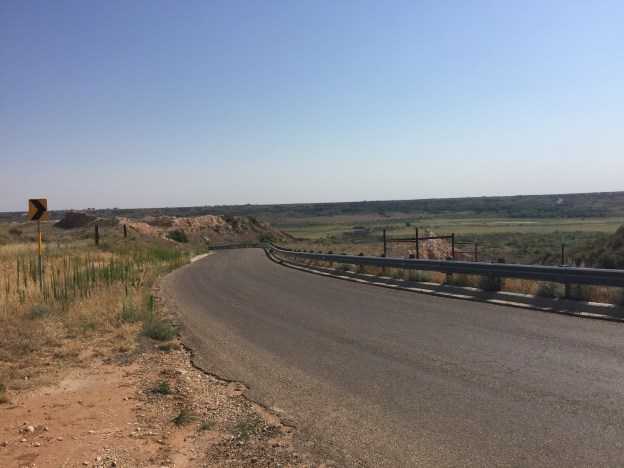
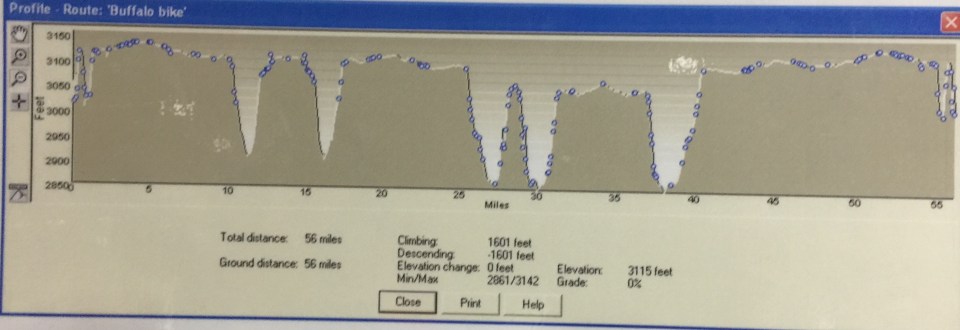
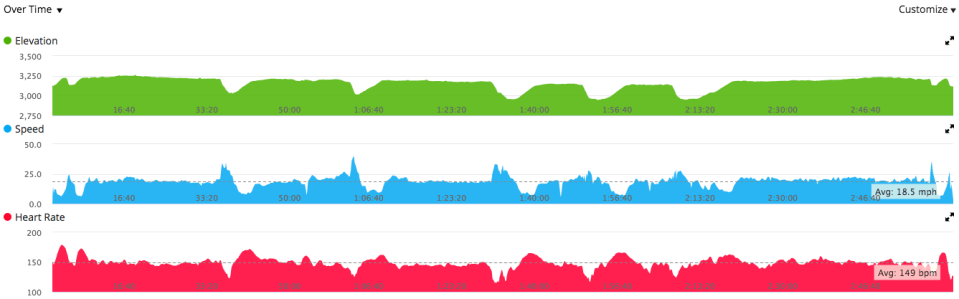
This was a much harder bike course and I did my best.  I hung about 15 minutes off of our KMF team leaders for the duration of the bike and felt strong on a challenging climb course with elevation change of approximately 3000 feet.
IMG_0624.JPG

Screen Shot 2017-06-26 at 4.51.32 PM.png

This is by far the most fun that I’ve had on a race course.  Never looked at my data during the ride, but knew that everything was clicking on the day.  Happy with an 18.5mph average on the bike.  If you are interested, top speed was 39.8, slowest 6.9 on the final climb.  My training preparation was on point and I was where I needed to be as I transitioned to the run.

Bike Time: 03:01:40

For my upcoming training:  Continue to put miles on the bike with a concentration on long and steady.

RUN

My pre-race notes to coach: Run.  Little bit lost as to how this one will work out, but I’ll play this one by ear.  I plan to take a moderate/easy pace coming off the bike and see where the legs are for the run. From last race report: “Next time: I will have a hydration bottle with me on the run.  This is something that I need to start using on every long run to get use to the idea.”   I’ve worked on this since Galveston and I’ll take your advice on a small ice chest with a throw away bottle of cold water rather than carrying a bottle the whole time – this seems a more reasonable solution.  I’ll again take in some salt on the ride and run.

Last Race: Time: 2:57:14 [walked due to bike problem]

Prior to the race, this run course had me scared to death.  The idea of coming off a very tough bike course onto a challenging run course left a lot of room for error.   In a pre-race seminar it was mentioned many time that this course was decided in the run.

The course was made of many small hills of 20 – 100 yards and a large 1/2 mile hill with a 10% grade – yes, we got to do it twice..   I started on the run course beside my teammate Paul Beaty and took the first mile of the course a little faster that I should – my decision.  We parted was and he continued his race as I settled to a 12 minute pace – my chosen pace based on how I felt and what I thought I could maintain for remainder of the race.  Screen Shot 2017-06-26 at 4.59.03 PM.png

I alway feel uncomfortable for the first 3 miles, but try to distract myself to plan my run. I don’t necessarily like running wet, but ice cube in my kit sounded like a fine idea.  They were a GREAT addition and likely saved my race from heart rate spikes when the sun made its appearance.   I settled into the race in mile 4, forgot the miles between 5 and 10, and the last three miles were TOUGH  but my pace didn’t suffer too much.

Run Decision 1: Denise and the kids gifted my with a camelback running bottle, and per my training I carried it throughout the race – this was an asset that I keep with my during my next races.   The ability to sip throughout the race was remarkably comforting and helped my maintain an appropriately hydrated throughout the run.  This was a race time decision since I put it in transition – it paid.

Run Decision 2:  I made the decision to walk the aid station.  This is different from having to walk the aid stations (at least in my mind).  I’ve heard this advice in the past and was too stubborn to do it.   I’ll never run through an Ironman aid station again.  Paul Beaty will tell you that it’s more like a power walk, but still it allowed me to fill up with gatorade, water and ice as needed and let my my body recover.

Decision 3:  Don’t walk.   This sounds easy, but it was the toughest one of the day.  There’s not a single team mate that wouldn’t have patted me on the back and congratulated me if I would have walked part of this run course, but on the drive to the race on it became my number 1 wanna do for this race. Decision 2 made this possible. Success.

Teammates on the run course were remarkable to be able to give a small boost when you were climbing our an attaboy when you were rocking a downhill.  I little bit of run time with Paul and Tim were valuable and up lifting.

After Galveston I stated: “Buffalo Spring will be in 89 days.    This means that I have a significant training block to increase my long-course fitness.  I would like to see a swim less that 00:40 with less effort and a completed run.    This is a much harder race from my understanding – a DNF is waiting if my preparation is lacking.”

For my upcoming training:  I need to continue to work on my run strength.   It’s very different to run a 1/2 marathon or a marathon versus putting swim yardage and bike miles in prior to a running race.  BRICKS, BRICKS, BRICKS.

Run Time: 2:30:50 

OVERALL TIME: 06:19:19

SUMMARY

This was a much harder race – a DNF was waiting if my preparation was lacking – my training wasn’t lacking.


I’m going to use Coach Amanda’s prompts for the next portion:

Mentally

I was 100% ready for everything that the race could have thrown at me.  I was ready for the worst.  The course was challenging, but nothing more than what I expected.

Done Right

Stay with my phase of the race.  Nutrition was on point with little need for change – more liquid nutrition is better.

Improvement

These remain from the last race: Fitness and daily nutrition.   Need to be at race weight by next race in 89 days – said before – I’m getting there.

I’m 1/2 Iron fit.  This is good at this time of year.   Now, Iron Fit.

Differently

I have little that I would have done differently at this race.  Planning and execution were as good as could be expected and was able to experiment with hydration, ice, and aid station breaks

Lessons

Continue to trained harder and longer with more bricks – the long distance is fitness, fitness, fitness.  Full-iron distance is scary from today’s viewpoint.

Just swim.  To Hell with everyone else.  My sighting and lines are fine.  I lose time worrying about others.

Back to Training

I want to continue to improve my intensity during training and push my work sessions. It was a pleasure to be prepared.

Next race

[going to leave this on blank – deciding on the Redman/No-Redman 70.3]
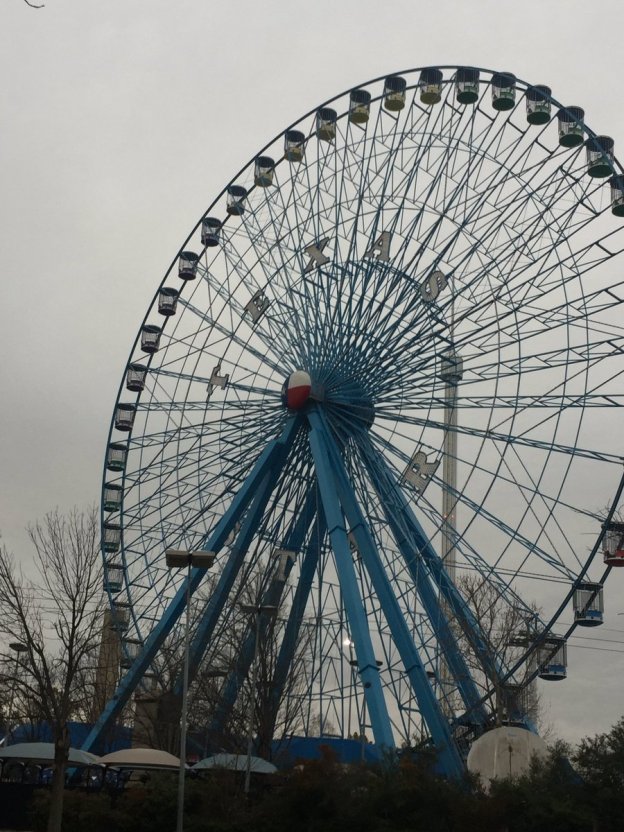


Hot Chocolate 15k, Dallas, Texas

The 15k is a strange distance.  I haven’t raced this particular distance, but now have enough races under my belt to begin estimating my pace and understand the character of the race as it happens.

16473487_10210960772089270_6590897849891174483_n.jpgWhy this race?  Jared Allen (pictured), my oldest son, decided to run the 5k.   No pressure, simply go out have have a good race with my son.

I set a race goal pace of 11:00 min. This was reasonable pace based on marathon pace.

During the Dallas Marathon, I ran a 12:00 min pace and exceeded my goals.  I didn’t have the same idea here. I simply wanted to DO THE WORK.    This is the first race in a very long 2017 season.  Coach Ben and I agreed to the pace with the idea of seeing what left for the last three miles.

Nutrition prior to the Race: Banana and #completecookie an hour before the race.   200 calories of #gotailwind waiting for the start.

The race started cold, humid with sprinkling rain.  At the same time, I hoped that my race would stay together.   I didn’t “feel” 100% . . . probably not 80%.  I’m a slow starter and the first 2-3 miles are always painful.  Plus, no heart rate monitor and the car parked a country mile from the start line.   Plus, thinking of Jared already on the 5k course trying to beat a PR – it would be a good day one way or another.

Nutrition on course: Clif Shot Bloks, and course provided NuuN

The first mile of the course is slightly declined and fast.  My pace started faster than I wanted at 10:12, but it felt calm and comfortable.   I determined, based on the course, that I would try to hold pace for the first 5k (10:11, 10:12).   On the other hand at this pace a crash and burn is inevitable.  Starting 45 seconds faster than a planned pace is asking for a later crash.

The second third (5-10k) was faster but I was holding the faster pace.  I stopped looking at my pace.   Why not take the shovel and dig deeper – there’s a wall and I was playing with ugly numbers (9:46, 9:45, 9:51) more than a minute and fifteen faster than my plan.

Did I say that I was a slow starter?  This pace was faster than I’ve run ANY timed 5k.

During the second third, I contemplated a lecture that Ben Drezek gave at the Tri-Shop,Plano in May 2016… to paraphrase:

There are moments of opportunity,
moments of settling (this pain is enough),
and moments of patience.

This meant a lot to me at a time since I was coming off a less than stellar performance of “settling” during a race.   Today, my back was killing me – everything else was working perfectly, but my back was hurting because my posture was hurting.  I could settle and have solid reasoning.

However, I made the choice of a “moment of opportunity.   I mentally divided the 15k into three separate races.  I was now finishing the second….and predicted that I would burn out but not yet….When? Today was a running day, so I pushed the pace again.

ONE of my 2017 triathlon goals is to run a “under 30 minute 5k”.  A less than stellar goal for many, but one that I need to handle.   So, I doubled down and started to push the pace in mile six.   It seems ridiculous to think this way this deep in a race, but these are the tricks we play with ourselves when we run at distance.

So, in my last 5k (race 3 of 3) I grunted out 9:18, 9:17 and 9:25 or a 28 minute 5k. Mile 7 -9 hurt.   Really hurt, but there was nothing injured.

The first part of my race didn’t matter anymore.   I don’t know that I’ve ever been more tired at the end of a race.

Yes, Jared ran a 25:50 with minimal training!  His first 5k race.

My goal: 1:42:32
Actual: 1:31:52 (10:42 under)

My first race of 2017 was going to be good regardless of the race outcome.  Turned out to be a lot of learning on a Saturday morning in February.

StateFairHotChoc15k.jpg

Growing up in the dirt

Growing up is mud pies, cut fingers, skin’t knees and elbows. Growing up is scars that don’t go away – they tell your story.   Growing up is both a mangy dog and fleas in your favorite hand-me-down sleeping bag – you don’t mind, he’s a friend.   Growing up is your first view of the Pacific Ocean and first taste of lobster caught out of the back of the restaurant. Growing up is a sleeping on your favorite horse under the oak trees on a hot summer day – you don’t mind falling, you can get back up by way of the barb wire fence.   Growing up is a BB gun – hunting for song birds.   Growing up is your first shotgun – for crows and squirrels.   Growing up is lead shot is the bottom of the stew pan – and between your back teeth.   Growing up is your first teepee, log cabin, fuzz stick – with two matches. Growing up is your Boy Scout firem’n chit and tote’n chit – with the burns and cuts to show that you earned ‘em. Growing up is grasshoppers collected on the morning grass – next to the favorite fishing pond. Growing up is cane poles, a red and white cork, and a big grasshopper, that just clawed you – on the end of the line.   Growing up is a family img_9110camping trip in the back of an old Ford at a place a long ways away  (20 miles from your home).   Growing up is learning how to carve a ball captured in a piece of wood from an old man with a sharp knife – and him letting you help him with his.   Growing up is jumping quail and peeing your pant – just a little. Growing up is eating pears out of a pear tree – until you’re sick. Growing up is eating more pears out of a pear tree, the next day – until you’re sick.

Growing up is your first hunting lease and first deer. Growing up the first gun you have bought on your own.   Growing up is camping with a high school friend with shotgun propped against a tree and a rabbit on the fire.   Growing up is skipping school to go fishing. Growing up is skipping school to go hunting.   Growing up is simply taking time just to be.

Growing up is time watching your kids do the their own thing in their own way and realize amount of the time that your parents spent watching you experience your first of many times. It’s realizing that your parents truly understood the difference between good-for-you, good-for-you-might-get-you-hurt, and might-get-you-killed.   It’s realizing the fragile balance between a boy becoming a man a girl becoming a woman or simply being an adult.   It’s realizing that your parent’s decision to let you do was much harder than you actually doing it.

Growing up is a story, not a common adult story, but the story of building independence in people.   I watch my boys experience their first dirt, spit grit, and take another bite.   Dirt is more than dirt, there’s some true grit in there.

Austin 70.3 Relay (bike leg)

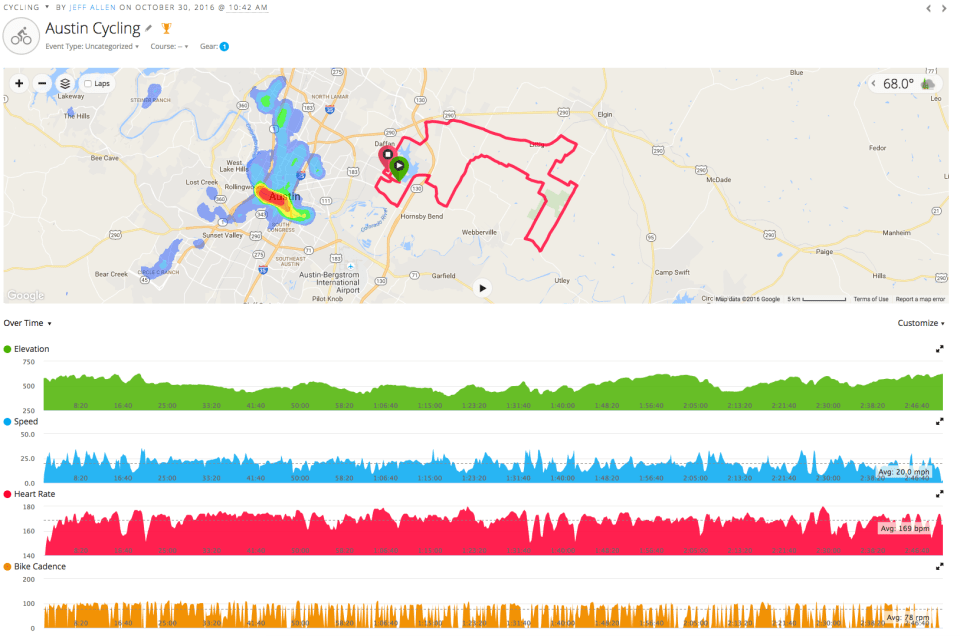
This race report is a little bit different than others since it’s not truly a race report, but self-feedback on a single leg of a race.  Additionally, there was no swim leg….so it was a walking start to the line, mount and ride.  However, I think you’ll find something useful with the information.  This race report was especially useful (in hindsight for my Dallas Marathon on December 11, 2016):

The Problems

  • Cramping – not hunger / bonk. My hypothesis is that it was an electrolyte problem, rather than a food problem.   1 bananas consumed hour before start of bike.   Felt good about my food prior to the start of the bike.
  • Average HR of 169, high 181. Zone 5 95% of time, Zone 4 5% of time. This is an overall fitness problem, but will improve naturally.
  • Don’t like the higher HR, but the goal was to “hammer” and reach 20mph average (successful).
  • Cramping at 45 mile marker:   QUAD cramping.   Gotta correct this one. Able to correct to some extent and stay engage on bike, however was locked up with I dismounted. Horrible. Need to do a lot of reading on the subject and get it corrected.

What was Right?

  • Able to stay in aero position 85-90% of time. Rough spots and 90 degree turns through 43 were the only time out of aero.   Out of aero on part of the climbs after 43, but overall satisfied with the position.
  • Quick on the bike and able to get into a steady sustainable rhythm until mile 17.  Issue at 17 (user error) cause a double calf cramp – able to stretch this one out and continue on ride with little delay.   This is a “that day” problem. Able to correct the problem quickly with stretching.   Felt great through 40ish.
  • Well trained going into bike relay
  • Completely comfortable on the bike. 

Mounting the bike

  • Need to work on shoes pre-placement and working to get shoes on bike in when starting the ride out of T1.
  • No opportunity in this race, but needs to be noted for my personal winter/spring practice.   Tim McCurry has right idea for shoes during out bike training sessions – leave them on bike perm….

Speed

  • Austin is a hilly course, but with the capability for me to carry 21mph.
  • First half was simply faster than the second half with slow decline throughout the course.
  • Decline was steeper than it should have been due to muscles (cramps) rather than fitness. Is this speed appropriate for ½IM? No. Eighteen to nineteen is reasonable to run the 13.1 after.

Equipment

  • Water: Carried for the day: 4 bottle slots (torpedo, three bottles).
  • Shoes were great, singlet worked fine. Gloves were nice for relay, but not
  • Food: One package of Skratch chews, one package of cliff shots (1/2 consumed during bike.
    • Need to consume more during ½ iron for transition to the run.
    • Not a huge amount of food, but something at 45-50 for transition to the fun.
  • Bike: Bike maintenance was good. Like the setup – cockpit and shorter crank shaft would be good next upgrades.

Next Time

  • Carry 3 bottles, one EMPTY slots for course bottles for on course liquid.   How?
    • Torpedo filled (Nuun),
    • two bottles on the back with liquid nutrition(tailwind), Bottle under horizontal is empty – allows easy reach of Gatorade/ water bottle to fill torpedo.
  • Bike bag: solid food that need to be place in left singlet leg
  • Run bag: solid food that can be consumed at the start of the run – not sticky sweet to slow down the beginning of the run.
  • Bento Box:      Need to find an easy to consume solid food that I can best consume on the bike in aero position.

I like a lot of what I did here, just small changes to make sure there is no calorie deficiency going to the run.   The run would have HURT due to cramping, but otherwise I would have been physically capable of transitioning to the run and finishing.

Screen Shot 2016-12-27 at 4.20.33 PM.png

Garmin Data


Dallas Marathon December 2016

I ran the Dallas half marathon in 2015 with a 2:29:20 negative split with a 2:30:00 goal.  I had to suffer to make it happen.  As I signed up for the marathon distance I was prepared to suffer twice as long.   As I heard many times, from many different athletes, “the Marathon ain’t no joke.”

Fall 2016

I had the distinct pleasure of racing with@kmfperformance in 2016.  This group took my previous athletic training to another level.   The spring and summer were filled grueling training, a Colorado training camp, and great teammates guided by accomplished and competent coaches.   After establishing a base of training as a self-coached athlete, I approached Coach Ben Drezek to become a coached-athlete.  Why so long?  To be honest I didn’t want waste my money or coaches time until I reached a fitness level where actual training could begin without wasting valuable time-resources.

Best decision I’ve made in my athletic career.  Outcome? Fall training was injury free – the first rule of getting to the starting line.

Fast forward to December 11, 2016

Heading to the official start line, I was prepared (Heart, mind, body and spirit).   This is the way that I wanted to come in this race.    The morning was foggy and approximately 50 degree.   4:30 breakfast of peanut butter, tortilla and a banana.  With added nutrition at 8:00a for the 8:30a start.

As I moved from my car for an 8:10 corral closure I knew it was going to be a successful day.  Suffering, yes.   On the top of my right shoe is written “ETS” – Embrace the  Suck. No doubt of finishing.

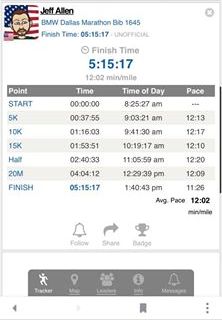
I set goal times:  5:20:15 – a 12:15 pace.   Where would disappointment begin? 5:30:00.   What was the best hope: 5:15:00 – this was a 12:00 pace.

to 5k:  DON’T Run.   Pace was too fast and I had to physically slow myself down.  I found a slower runner and stuck behind them for a 1/4 mile just to get me recentered.    5k split: 12:13.

to 10k:  I remember distinctly this part of the course last year.  Misery.  This part of the course heads uphill and it’s easy to get discouraged.  Today, I lost those miles.  I didn’t feel them.  I just counted mile makers.   Water/gatorade at mile 3 and six.  10k split: 12:17.

to 15k: All uphill: I worried over this part of the course pre-race, but I had done my study of the courses.  Water/gatorade and nutrition in this stretch (1x).  15k split: 12:10.

to Half: This is a downhill to level stretch.   No fear here.  Cruising.  Nine miles behind me – easy.  Now I can stretch it out a bit and head to the finish line.  Honestly, the thought crossed my head. Briefly. I was running easy, no hotspots, no “real” aches, and nutrition on point.   Keep to the plan, keep to the plan, keep to the plan.  Water and  gatorade every other mile.  Mile 13/Half split: 12:20.

to 20 miles: Long time on the feet, but everything was falling into place.  17 to 22 is the toughest part of this marathon.   I felt great as we moved from the flat (into the 15 mph southern wind) and onto the climb back into Dallas.   I expected a slowdown, but, my pace continued to quicken – perceived effort was up a little, but I was planning a negative split.  My first half of the race discipline was now paying dividends.  Feeling good – let’s stretch the legs. 20mile split: 12:09.

to the finish: I’m ahead of my goal time by at least a couple of minutes moving off of the climb, nutrition had a few problems (incorrectly relied on an aid station) but I was in the driver’s seat.  Mile 22 – 23 was contemplation – what now?  Settle, or attack?  Attacking meant and possibly heroic crash before the finish line.   Yep, attack it is.  I treated the mile 23 marker as a new 5k start line.   A tired start, but a start.   Outcome? My last 10k (6.1 miles) was finished at a 11:26 pace….I gained time each mile from 20 to 26.2.
15492293_10154794497009719_2127624443935819201_n.jpgHow tired?  Bone tired.  The wind nearly pushed me down at the top of a hill and in sight of the finish line.  But, I left everything that I had on the course.  Mind, body and spirit.

Marathon in the future?  Sure.  Longer? Maybe.  But next “A race” is Ironman Arizona  (@IRONMANArizona) in November 2016….a marathon after swimming and biking.

FINISH TIME: 5:15:17

FIVE MINUTE BETTER THAN GOAL!  Preparation!  Thanks Coach!


Disco Olympic Triathlon September 2016

September 11, 2016
– Jeff Allen

Statistics

Swim – 1500 yards (actually ~1850)
Bike – 24.0 miles
Run – 6.2 miles

Temperature was cool and the water was warm. Nearly perfect temperature at the starting line. The Texas wind was sleeping in for the day and left the lake with small swells 800 yards out from the start line. A dream scenario for a virgin no-wetsuit open-water one-mile swimmer. I remain a toddler at triathlon – my third race – a longer distance. I continue to build as an athlete.

A Quick Diversion

 Repeated in my mind countless time during the training whether hard, early, or in overtime: “You can’t cheat the grind…it knows how hard you’ve worked, the effort you have put in, and the time you’ve dedicated…it will only give you what you’ve earned.”

I made a very deliberate decision to cancel my planned races after the Texas man Sprint (May 22nd) to train rather than race.   I have a long journey in mind and the pit stops for celebration of accomplishments had to be put on hold so that I could get very serious about my triathlon training over the summer.

Why? I’m an old fat man that takes time to taper and to recover. This means two weeks of off time for every race for me.   I figured this would cost me up to 6 weeks of serious training over the summer. So, the summer training schedule was set. This included a one-week June trip to Leadville, Colorado to train with KMF beast in the mountain that were stingy with oxygen. In Colorado the fitness level of the KMF athletes again demonstrated the rewards of steady, progressive hard work.

 Off to the race

National Anthem meant a little more today.   9/11 remembered.

The question before this race: Am I a triathlete?   Each person has a different question in their mind before each race, this was mine – no explanation. I know I have the training, I know I’ve done the work. Can I put it all together in an Olympic-distance race?

SWIM: My first open-water swim without a wet suit and double my furthest race distance. This was a beach start for the open water swim, but the chaos of the last races didn’t appear.   The start for me was calm and my heart rate stayed steady as I entered the water and found a line. Michael Kaiser reiterated sage advice to find a pace swimmer. I worked to get in the draft of another swimmer…it didn’t work.

I repeated my race swim goal to myself. Prior to the race I stated “My goal is to keep a pace between 1:50 – 1:55 . . . I want to feel good leaving the water without weak legs.  Need to concentrate on my pull”.   I then ignored other swimmers and worked on a clean line between the swim buoys. A calf cramp at about 1000 yard forced me to concentrate more on my pull stoke and rest my legs for the next section of the swim course – just calm my kick a little bit. The cramp was a small blessing and I came out of the water feeling good. Goal accomplished.   However, flat water and a 2:10 swim pace meant that I was slower than I should have been for the conditions – I left some in the tank when I left the water. But then again, I stayed on plan – I’ll take that as a segment win.

BIKE:   My first Olympic distance bike race. Race plan: “Goals is to stay between 17-18mph.  Heart rate no higher than 160.” I set my bike goal too low. I knew it – coach knew it. Ben and I are still getting to know each other as coach and athlete so he kindly let it stand without censure.Screen Shot 2016-09-12 at 3.20.29 PM.png

My summer training, especially on the bike, had produce results moving me from a 215 ftp to a 255 ftp. My pre-race goal on the bike was really stating that I’m afraid of the run. I wanted to have enough left after the bike to put in a decent 6.2 mile run. So, I pushed a 19.9 on the bike with a heart rate between 165-170. This was not hammering – it was a controlled strong pace.   At this pace I knew that I could still run after the bike.  I raced the bike where my goal should have been for the distance.

NUTRITION: Struggled with my nutrition plan, again, but it was better than the last race – progress. Drinking/eating in fear of the bonk. It’s a work in progress. It showed in my run – too much intake of liquid. Simply didn’t need it.

RUN: My first 10k race segment.   My legs felt fine after coming off the bike. Coach Ben said AFTER race that the Olympic distance race is a dangerous– you want to go too fast in the beginning and if you do you pay for it at the end. Truth.   I never have a good first two miles. I couldn’t find my pace and I wanted to run…bad decision – immediate heart rate spikes that I worked to manage.   Race plan: “Negative split on run.  Keep the first three miles under control (11:30 – 12:00) and push last three miles at 10:30-10:45.”  I didn’t keep the first three miles under control. I didn’t keep the last three miles under control.   I felt out of control the whole time. I simply couldn’t keep my heart rate down. Finally in mile 4 my mind settled and simply ran the conditions. This meant a stiff fast hike up a two hills to settle my heart rate during the race – this hurt my ego. BUT, at the end of the race I keep an 11:09 pace – pace was steady(ish) from mile 1 to 6.2. Beat my run segment pace goals, but not the way that I should have done it.

Lessons

  • Positive not negative: Triathlon, like boxing, does not favor the coward. My race goals were extremely reasonable, too reasonable.
  • Nutrition tells the race: Need to continue to dial race nutrition in before NOLA ½ IM. Pre-race nutrition was perfect.
  • Enjoy the race: I stuck my tongue out at the first buoy (literally). I was enjoying the swim and knew that I had it beat at the 750 mark. The 1500 yard swim showed closer to 1850 yards. The distance didn’t matter on race day and I could have done twice the distance – at the pace. ***More racing, less enjoying. Enjoy the race!***
  • Building my base: At the end of Texas man I wrote: “Summer is coming and I have the opportunity to again concentrate on my base fitness. Game on.” My base is now solid and I can begin to build distance.
  • Running, Running, Running: Smooth is fast. My time/pace will improve on it’s own. I have to learn to be a better runner and become a comfortable runner. I’ve thrown down a gauntlet with the Dallas Marathon!   But, you can’t cheat the grind. I haven’t earned any better with my running thus far. It will come after a hard Fall of running.
  • Coaching: At the end of summer, I invested in structured coaching. Good move. It’s enhanced my absorption of triathlon knowledge. “When the student is ready the teacher will appear.”

#‎dotheblogthing #‎winning ‪#‎dothething ‪#‎kmfendure ‪#‎kmfperformance #thegrind

Texas man Tri Sprint 2016

May 22, 2016
– Jeff Allen

Statistics:

Swim – 500 yards
Bike – 16.1 miles
Run – 3.1 miles

Temperature was perfect at the starting line and the water was cool (wetsuit legal). There was a wind blowing into the cove that left a swelling chop coming directly at the start line.

I remain an infant at triathlon – my second race.

My personal life is crazy and the week leading up to the race left little time to prepare. Then Friday happened. A blown tire led to a barefoot walk on warm asphalt (with molten holes of tar). I realized when I reached home that I created a quarter-sized blister in the middle of BOTH forefeet.

The time leading up to the race was then filled with moleskin and athletic tape. Followed by feet propped up to heal. Of course, this didn’t happen – a banquet, packet pickup, groceries, etc. kept on me on sore wrapped feet. There was nothing to make the best of the bad situation. I walked to markup on sore feet and doubted my capability to finish the race. The way that the week developed it’s also little surprise that my morning nutrition was not my normal pre-race meal. A DNF on my second race?

SWIM: The beach start was chaotic and the predicted chop was actually swells with chop on top. This isn’t what I imagined for my first open water race. I got a rhythm and started sighting on the top of every second swell. I swam hard with the pack and took Ben’s advise on stroke turnover and churned against the swells. My only thought – get to the first turn and all will be good. Except it wasn’t exactly – I was toasted. I flipped my belly to the sky after clearing the first buoy and took a ten count (with a strong kick) to calm myself. This made all the difference in the world to my swim.

I couldn’t believe how tired I was after 250 yards. Turning the second buoy was a gift and it was downwind from that point. I hit the beach after 500 yards tuckered out – and, yes, on sore feet. I didn’t know at the time that I hit a 1:41 pace on the swim (big win). The recent open water practice made all the difference in my mind.

On to the strippers!

T1: Meant sitting in front of my bike (an understandable sin). But two precut moleskins were applied to damp, sandy feet and high-quality socks were added on top. A little bit of time was lost and it seems to take more than the true 30 seconds of application. After the race they were still to be perfectly positioned around the blisters. A stroke of luck! How did this happen with the sand, water?

BIKE:   This is when my pre-race lack of nutrition planning hurt me. My speed was fine at 19.1, but my gut didn’t like my nutrition and fluid choices – live and learn. Much of this was left in the grass at mile 6 with one foot off the bike. It was worth the break. But, I was fearful of was putting anything else in my system. Since it was a sprint, I chalked it up as a lesson and went on about my race. Getting passed by a 14 yo badass girl was great – there’s work to do! I admire her fitness. Good stuff.2ndTriSwim.jpg

T2: An easy transition filled with trepidation – I could stop with no fear of ridicule. To run or not to run. TO RUN! HTFU and get on the race course.

RUN: I had to run. My new Altras demanded a race. I started off too fast, but quickly settled into a pace I could keep for the course. The beginning of the run felt awkwardly, slow, and off while I experimented to get some relief from my self-created blisters – this wasn’t going to get the job done. I dug deeper and determined that there was no way to run around the blisters. I sank into my normal run cadence and simply ran on the blisters. By the one-mile mark the blister pain was set to the back of my head and and I had a normal-ish race ahead of me. My pace wasn’t the point today: 31 seconds off of my last race. This run was a mental win. Thanks team mates and coaches!

Lessons:

  • Mental is important: This was a short sprint but there was a lot involved. The blisters put me into a different place on the run and made me work on a different aspect of my game.   Past experience in other venues transferred to the race and provided me an opportunity to manage my race
  • Nutrition: Need to dial this in more and remember that pre-race is just as important as the race itself. This isn’t the first time that this issue has raised it’s head.
  • Race the day: The race is the race. The day is the day. The wind and weather will do whatever wind and weather do. Everyone has a different race.
  • Building my base: Summer is coming and I have the opportunity to again concentrate on my base fitness. Game on.

#‎dotheblogthing #‎winning ‪#‎dothething ‪#‎kmfendure ‪#‎kmfperformance #thegrind

Mean Green Triathlon Sprint

March 20, 2016
– Jeff Allen

The morning of March 20th was exciting – the annual Mean Green Tri. Breakfast was great and the nerves were well under control. It was fast and I finished my race. Hit the podium in third place My virgin triathlon experience was complete and I was ready for the next. So, there’s the story – the beginning, the middle and the end.

The reason of why, for me, is the important part of this experience.

I observed my first triathlon over a year earlier in August of 2014. I didn’t run that triathlon, but ran the 5k option as a weekend training run. The opportunity to train for triathlon began slowly enough in 2015 with a few 5ks, a 100-mile bike race, and ended with the Dallas ½ Marathon in December 2015. The desire to run a triathlon was strong in Fall 2015, but I didn’t simply want to do it to say that I just did a triathlon – I wanted to be prepared to compete. I had a great mentor in Max Atkinson during 2015 and knew what was ahead of me. 

Joining a club team was step #1 in my preparation for Mean Green. I researched and found THE team that would fit. After talking with Coach Ben, I sat in training for a few weeks to make sure that there was a match. KMF’s “do work” attitude was perfect for my style of training and the welcome to the team was simple: don’t waste our time, do work, find your place – perfect. I found everything that I needed in a competitive family of racers.

Do the work in winter training. I showed up in the midst of winter training and dove right into training – What was the training the second night: Sufferlandria Nine Hammers. Holly SH*$! YES! This was the day that I realized that the team was serious about training and knew that I had a home. My problem – I’m old, fat and slow. I worked during winter training to physically keep up and attended the training sessions (including every Tuesday Night Track session).

Winter training, for this newcomer to the sport, also meant: reading; watching countless training videos; asking questions; trying equipment; improving my race legs, improving my lungs; attending Tri Shop training sessions; finding extra workouts (swim); and developing a beginner’s training plan. The big winter questions: How do I optimize best training load to recover? What’s the balance needed for achieving my goals? Recovery takes more time with age…

 The starting of the season was March13th were I watched the team dominate at the St. Patrick’s Sprint. Yes, I snuck into the transition and took endless picture of setups and took a lot of “remember this” notes. This generated an intense week of completing quick laps at the stadium to work the transition and testing my setup.

The day of the race actually was COLD. 34 degree, 10mph wind out of the Northwest. This sound like a great start doing a singlet for the first time. My nerves were GREAT. My heart rate was under control and no butterflies. This surprised me – but, I’ve competed against other boxers for the last six years. This time, I was competing against me. What was my goal?   Hit a PR in all stages.

Swim:              2:00/100yd pace      PR/baseline

Transition 1:   1:15.0                        PR/baseline

Bike                  19.3 mph pace         PR/baseline

Transition 2:   52.7                           PR/baseline

Run:                  10.08 mph pace     PR/baseline

Total:               1:20:10.7                   PR/baseline

The serpentine swim was nuts. My lungs and legs were well prepared, but I stumbled over weaker swimmers in front of me – got caught behind a crowed pack. I slowed down to my average pace (1:55) and relegated myself to a slightly slower pace. I certainly could have pushed harder, but didn’t know where the edge was at this first race. I cracked the top of my right foot on the pool edge coming out of the pool though it didn’t impact my race. The time was expected. I was TIRED coming out of the short 400 yard swim – the nerves caught up with me.

I made a very clean transition in the pen and seemed to try my best to wreck by multitasking in my bike mount. Lesson learned. The bike leg was good, not great. I have do say that I was amazed and to be on the course with a number of my teammates that were much stronger than me. I never expected to see them. This gave energy and pushed my bike pace. I pushed hard on the bike to make up for my next leg. The time was expected.

I came into transition fast and ran through the transition in a perfect effort for me. Now my nemesis – the run. I’ve trained and worked on changing my running style during winter practice. Tuesday nights are priceless. My pace during the race was steady but I found myself settling into “relegated” pace rather than pushing. My third mile was better. Bullet Bob was behind me and the only thing that I would do was TRY to hold him off. Not really, hold him off, he is a much better athlete – but it gave me a running goal. I survived the run – my time was slightly better than I expected (thanks Bob).

meangreenbiketransitionAfter the race I felt relieved and accomplished – even for a sprint that was another training day for most. I have now competed in one race. I’m a superman – a PR in every category. My race PRs could also be called baselines. My goal of the race was to set baselines and rise to my training.

Goals? Of Course! Olympic in September, Dallas Full Marathon in December, ½ Iron in Spring 2017 and 2017 IMAZ. Why? I can stand on the shoulder of giants in our club that have an amazing base of knowledge. These goals are set without full confidence in their ability and my work ethic. Can it truly be done? I don’t know yet. I’m simply a new triathlete with an amazing team.

#‎dotheblogthing #‎winning ‪#‎dothething ‪#‎kmfendure ‪#‎kmfperformance #thegrind